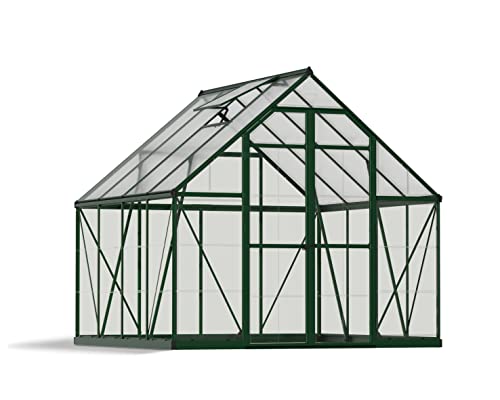
The Palram Canopia Balance is the one to look at when the 6x8 kits feel like a closet. It keeps the hybrid approach of a diffused roof and clear walls, but adds 2 feet of width, a taller ridge and double doors wide enough to walk through with a cart. It ranks third in our lineup because it costs you more yard and more upfront work for that comfort. Here is what the maker says, who benefits and who should stay smaller. You can see the whole field in our ranking of the best greenhouses of 2026.
We have not assembled or handled this greenhouse and we take no measurements of our own. The facts below come from the maker’s published page and from general guidance, and we say so when a number is not published.
What Palram Says
According to Canopia by Palram, the Balance uses hybrid glazing: twin-wall polycarbonate roof panels with clear wall panels that transmit over 90% of light and are UV protected. The aluminum frame is rust-resistant and includes extra strong support beams. The footprint is 8 ft 1 in long by 8 ft wide, and the height is 7 ft 6 in.
Those numbers matter more than they look. Sixty-five square feet is not much larger than a 6x8 on paper, but the extra width lets you run a bench along each wall and still leave an aisle you can walk without turning sideways. The extra eight inches or so of ridge height means taller people do not stoop and tall crops such as tomatoes and cucumbers have room to climb.
The Doors Are the Point
Palram lists wide double doors with a low threshold and a door opening of 3 ft 9 in wide by 6 ft 4 in high. Compare that with the 1 ft 10 in opening on the Palram Canopia Hybrid 6x8, and you can see why this model feels different. You can wheel in a cart of potting mix, carry a 20-inch container or move a bench without taking apart the entrance.
A low threshold is not a small detail either. Anyone who uses a garden cart, a walker or a wheelchair knows how much a lip at the door matters, and a kit that lets you roll across it is easier to live with every day. Keep in mind that double doors need clear swing room, and you should check that they will open fully with your intended placement, away from fences, steps or shrubs.
Ventilation
The Balance has manual roof windows for ventilation, per Palram. Palram’s page does not give a count or an area, so check the product listing for the number of vents. The University of Georgia Cooperative Extension advises sizing natural ridge vents at about one fourth of the floor area, with side vents about the same size, and cautions that side vents alone depend on wind and are usually inadequate. For a 65 sq ft floor, that rule works out to roughly 16 sq ft of roof vent area, which is more than most small kits provide.
That is not a flaw unique to Palram. It is the reason gardeners add accessories. Practical measures include wax-piston automatic openers, a small circulation fan, 30 to 50 percent shade cloth in summer and the habit of opening both doors on warm days. Doors that open wide are an advantage in this respect, since the double doors act as a large vent when you are in the yard.
Wind, Snow and Site Work
Palram’s product page for the Balance does not state wind or snow numbers, so we do not quote any. Because this structure is taller and wider than a 6x8, wind pushes on a larger surface, and a proper foundation and anchoring matter more. Build a level base from pressure-treated lumber on compacted gravel, concrete pavers or a slab, fasten the frame to it as the instructions describe and, on open ground, add ground anchors.
Set it where houses, fences or hedges cut the worst wind, and where you can clear snow from the roof easily. Ask your building department for the ground snow load at your address. Snow belts around the Great Lakes, in upstate New York and in the mountain West can exceed what a light polycarbonate roof is designed to carry, so be prepared to sweep the roof after storms.
Permits and HOAs
At about 64 sq ft, an 8x8 sits close to the size thresholds many towns use for permit exemptions, though the cutoff varies, and a structure over a certain height may need extra sign-off. Setbacks from lot lines, location in a front yard and whether it counts as a permanent building can all matter. If an HOA governs your property, ask for written approval and describe the footprint, the height of 7 ft 6 in, the color and the materials. Doing this first costs a phone call. Doing it afterward can cost a teardown.
Winter and Summer Use
The USDA Plant Hardiness Zone Map divides the country into 10°F zones with 5°F half zones, based on the average annual extreme minimum temperature. A twin-wall roof and an enclosed space help in cold weather, but an unheated greenhouse does not stay far above outdoor temperature on a clear, still night.
If you plan to heat, the Georgia extension publication suggests two smaller heating units over one large one, so one can keep working if the other fails, and it recommends running air circulation fans and using a battery-powered alarm. Do not use an unvented combustion heater, and place a carbon monoxide detector if you burn any fuel.
In summer, the taller roof gives hot air somewhere to go, which is an advantage over a 6x8, but the same shade and ventilation rules apply, especially in the Southwest and the Central Valley.
What Fits Inside
A bench along each side wall, a central aisle and room for several large containers is the typical layout. Because the height is 7 ft 6 in, you can add hanging shelves above head height, though you should check the frame instructions before hanging heavy loads. A dwarf citrus tree in a large pot, a row of tomatoes in containers and a seed-starting bench are all realistic. In-ground beds are possible only if you build the greenhouse over soil and anchor it accordingly, which complicates drainage and pest control.
Who Should Buy It
- Serious home growers who want a comfortable interior and a cart-friendly entrance.
- Buyers with enough yard to place a taller structure and prepare a larger base.
- Gardeners with mobility needs who benefit from a low threshold and wide doors.
- Households who expect to use the space as a workroom as well as a growing space.
Who Should Look Elsewhere
- Small yards, decks and patios: the Balance is too big, and a smaller kit like the Palram Canopia Mythos 6x8 fits better.
- Buyers who want a published wind and snow rating: the Hybrid page publishes them.
- Gardeners who want a long, narrow growing space: the Palram Canopia Snap & Grow 6x12 offers more length.
- Anyone who wants an automatic vent out of the box.
Warranty and Care
Palram’s FAQ says its greenhouses carry a warranty of at least five years. Read the terms for storm and misuse exclusions. Maintenance includes washing the panels once or twice a year, checking fasteners after the first season, lubricating hinges and keeping the door track and threshold clear of debris.
Bottom Line
The Balance is the model that treats a greenhouse as a room. It gives you headroom, wide doors and a hybrid glazing layout with extra frame strength. In return it asks for a bigger footprint, a more careful base and a larger commitment. If you have the yard and you want to work comfortably inside, it is a strong choice. Use the button below to see the current price on Amazon.
See price on Amazon
Sources