We may earn a commission when you buy through links on this site, at no extra cost to you. As an Amazon Associate I earn from qualifying purchases.
Comparison
Best Greenhouses of 2026: 10 Kits Compared
We compared the published specs of 10 greenhouse kits for 2026, from Palram Canopia to Outsunny, VEVOR and Quictent, and ranked them by who each one suits.
B By the Best Greenhouse editorial team ·Published
At a glance
For a first backyard greenhouse, start with the Palram Canopia Hybrid 6x8, the only kit here with published wind and snow figures. The Palram Canopia Balance 8x8 adds headroom and wide doors, and the Quictent 20x10x7 Walk-In Tunnel Greenhouse offers the most space for a seasonal budget setup.
A greenhouse kit is a bigger commitment than most garden purchases. It takes up real yard space, it needs a level base, and it can raise questions with your town or your HOA. It also comes in very different forms: rigid polycarbonate boxes, a lean-to that borrows your house wall, a soft plastic tunnel, and a cabinet small enough for a balcony. This comparison lines up ten kits sold on Amazon so you can see how they differ before you pick one.
We have not built any of these kits. We compared the specifications published by Palram’s Canopia line, Outsunny, VEVOR and Quictent, read the manufacturer pages where they exist, and ranked the models by how well they fit the most common American backyard situations. Where a figure comes from a maker, we say so. Where a maker publishes nothing, we say that too. Each section links to a longer profile of the model.
How We Chose and What Matters
Seven things separate one greenhouse kit from another, and we weighed each ranking against them.
Frame. Every rigid kit here uses an aluminum frame, which does not rust, except the Sun Room, which has a thick resin frame with aluminum profiles. The Quictent uses a steel frame under a plastic cover. Frame material matters less than how the frame is braced and anchored, so look for the maker’s notes on both.
Glazing. Twin-wall polycarbonate has an air pocket between two skins. It diffuses light, which reduces scorching and hot spots, and it slows heat loss at night. Single-wall clear panels pass more light and give a better view of your plants, but they hold less heat and can overheat in strong sun. The soft polyethylene (PE) film on a tunnel is the lightest and cheapest cover, and also the shortest-lived: University extension guidance puts typical PE film life at roughly one to three years, depending on the type.
Footprint and headroom. A 6x8 kit gives about 49 sq ft of floor, an 8x8 gives about 65 sq ft, and a 6x12 gives roughly 75 sq ft. Headroom matters just as much as floor area if you plan to grow tomatoes, trellised vines or a potted lemon tree, and if you are tall. Door width decides whether a wheelbarrow or a large planter will fit.
Ventilation. A closed greenhouse in summer sun gets hot quickly. Look at the number of roof vents or windows and whether they open by hand or automatically. None of the rigid kits here is described as including an automatic vent opener, so budget for a fan or a vent opener if you will be away during the day.
Base and anchoring. Most kits ship with no floor. You supply a level foundation, such as a lumber frame, pavers, gravel or a slab, and fasten the greenhouse to it. A light structure that is not anchored can move in a gust, and that is true of the lighter Outsunny models and the soft-sided tunnel in particular.
Wind and snow ratings. Ratings are rare. Only the Palram Canopia Hybrid 6x8 has a maker-published wind speed and snow load that we found: 56 mph winds and 15 lb per sq ft of snow, according to Palram. VEVOR’s Amazon listing says the roof is rated for up to 5.12 lb per sq ft and Beaufort 6-7 winds when properly installed and reinforced. For every other model, assume modest tolerance and clear snow by hand.
Permits and HOA rules. University extension guidance notes that a building permit is usually required to erect a greenhouse, and many cities exempt small accessory structures under a size threshold that varies. Check setbacks, height limits and HOA rules before you buy, and get approval in writing if you rent. A lean-to that attaches to your house raises more questions than a freestanding kit.
Greenhouse Comparison Table
#
Model
Type
Footprint (maker)
Panels
Frame
Best for
1
Palram Canopia Hybrid 6x8
Freestanding walk-in
8 ft 1 in x 6 ft 1 in
Twin-wall roof, clear walls
Aluminum
First backyard greenhouse
2
Palram Canopia Mythos 6x8
Freestanding walk-in
8 ft 1 in x 6 ft 1 in
Twin-wall all round
Aluminum, steel base
Hot, sunny regions
3
Palram Canopia Balance 8x8
Freestanding walk-in
8 ft 1 in x 8 ft
Twin-wall roof, clear walls
Aluminum
Serious growers who want room
4
Palram Canopia Snap & Grow 6x12
Freestanding walk-in
12 ft 3 in x 6 ft 2 in
Clear polycarbonate
Aluminum
Long benches, cloudy climates
5
VEVOR 8x10 Polycarbonate Greenhouse
Freestanding walk-in
About 8 x 10 ft
4 mm polycarbonate
Aluminum
Space and ventilation, mild winters
6
Outsunny 6x8 Walk-In Polycarbonate Greenhouse
Freestanding walk-in
About 99 x 75 in
4 mm polycarbonate
Aluminum, steel base
Sheltered backyard starter
7
Palram Canopia Sun Room 8x10
Lean-to solarium
10 ft 7 in x 8 ft 5 in
Twin-wall roof, acrylic walls
Resin and aluminum
Attaching to a house wall
8
Outsunny 6x4 Lean-To Greenhouse
Lean-to
About 75.6 x 50 in
4 mm polycarbonate
Aluminum, steel base
Patio or side-yard wall
9
Quictent 20x10x7 Walk-In Tunnel Greenhouse
Soft-sided tunnel
About 19.7 x 9.8 ft
Two-layer PE cover
Steel
Maximum space, seasonal use
10
Outsunny Polycarbonate Cold Frame Cabinet
Cold frame cabinet
51.5 x 22.75 in
Polycarbonate
Aluminum on steel base
Balcony seedlings and herbs
Dimensions and materials are as stated by Palram, Outsunny, VEVOR and Quictent. The “Best for” column is our own reading of the specs.
1. Palram Canopia Hybrid 6x8 — The Documented All-Rounder
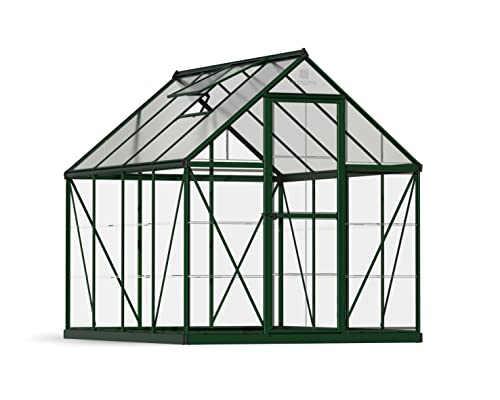
A well-documented mid-range kit for a first backyard greenhouse in a mild to moderately snowy climate, as long as you plan your own base and extra ventilation.
What we like
Diffused twin-wall roof with clear walls for strong light
Rust-resistant powder-coated aluminum frame
Built-in gutter and manual roof vent
Palram publishes wind and snow load figures
Drawbacks
No floor or base included
Narrow 1 ft 10 in door limits wheelbarrows and wide pots
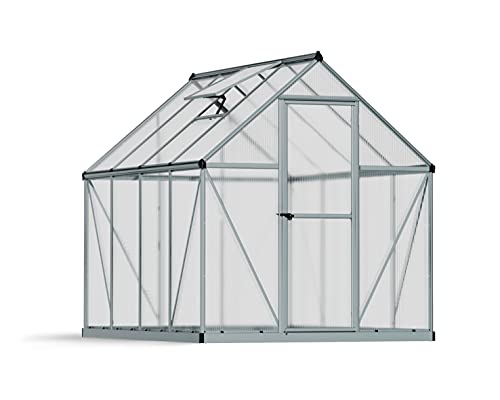
The Hybrid takes first place because it is the best-documented kit here, and for a first greenhouse that matters more than a long feature list. Palram says it withstands winds up to 56 mph and snow loads of 15 lb per sq ft. No other model in this group publishes both numbers. Those figures assume the kit is assembled and anchored exactly as the instructions say, so they are a reason to read the manual closely, not a promise.
The glazing is a hybrid of twin-wall diffused polycarbonate on the roof and clear polycarbonate walls, according to Palram, which gives you some insulation and soft light from above and a clear view from the sides. The powder-coated aluminum frame is rust-resistant, and Palram adds a built-in gutter and a manual roof vent. The footprint is about 8 ft 1 in by 6 ft 1 in, with a peak height of 6 ft 10 in.
The trade-offs are practical. There is no floor or base in the box, so budget for a foundation. The door is only 1 ft 10 in wide, which rules out most wheelbarrows. One vent is thin for a hot climate, so plan on a fan or a second vent. We cover those points in the Hybrid profile.
2. Palram Canopia Mythos 6x8 — Diffused Light, Base Included
A sensible pick for hot or sunny regions and for gardeners who want a base and a second vent in the box, provided you accept a frosted look and a narrow door.
What we like
Galvanized steel perimeter base included for stability
Two manually adjustable roof vent windows
Twin-wall panels all round diffuse light and add some insulation
Heavy-duty rust-resistant aluminum frame
Drawbacks
Diffused panels give a softer, less see-through view than clear walls
Narrow 1 ft 10 in door
Palram's page gives no wind or snow figures for this model
The Mythos shares the Hybrid’s footprint and 6 ft 10 in height, but it changes three things. All of its panels are twin-wall polycarbonate, so the interior light is soft and evenly diffused. It has two manually adjustable roof vent windows instead of one. And it includes a galvanized steel perimeter base for stability, according to Palram.
Those choices point to hot, sunny regions. Diffused light reduces scorching on leaves, and a second vent helps shed heat. The cost is a frosted view: you will not see the garden through the walls the way you do with the Hybrid’s clear sides. Palram’s page gives no wind or snow figures for the Mythos, so it ranks below the Hybrid. The base still has to sit on level ground and be anchored. The door is the same narrow 1 ft 10 in. See the Mythos profile for details.
The most comfortable Palram to work in, and a good fit for a serious backyard grower who wants room to move, as long as the yard and the budget can handle the extra size.
What we like
Wide double doors with a low threshold for carts and large pots
7 ft 6 in height gives real headroom
Hybrid glazing: twin-wall roof and clear walls
Extra strong support beams in a rust-resistant aluminum frame
Drawbacks
Larger footprint needs more yard, more base work and more permit attention
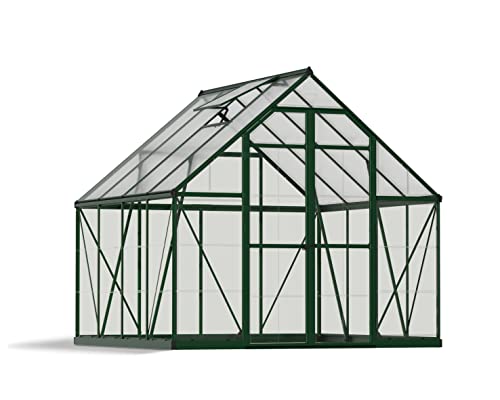
If the 6x8 feels like a closet, the Balance is the answer. Palram lists a footprint of about 8 ft 1 in by 8 ft, a height of 7 ft 6 in, and a pair of wide double doors with a low threshold. The opening is 3 ft 9 in wide by 6 ft 4 in high, which is wide enough for most garden carts and large pots. The glazing is the same hybrid layout as the Hybrid 6x8, with a twin-wall roof and clear walls, on a rust-resistant aluminum frame with extra strong support beams.
It ranks third for two reasons. A larger structure needs more yard, a bigger base and more attention from your town or HOA. And Palram’s page lists no wind or snow figures for it, so we cannot rate its resilience the way we can for the Hybrid. The roof windows are manual. For a serious backyard grower with space and a taller crop list, it is the most comfortable of the four Palram freestanding kits. See the Balance profile.
4. Palram Canopia Snap & Grow 6x12 — Long and Bright
A good pick for growers who want length and plenty of light for vegetables and who can add shading and ventilation, especially in cloudy or northern regions.
What we like
12 ft 3 in length gives long benches or several rows
SmartLock aluminum frame locks together without screws
Extra-tall Dutch door with low threshold
Clear panels pass over 90% of light
Drawbacks
Clear panels can overheat in strong sun without shade
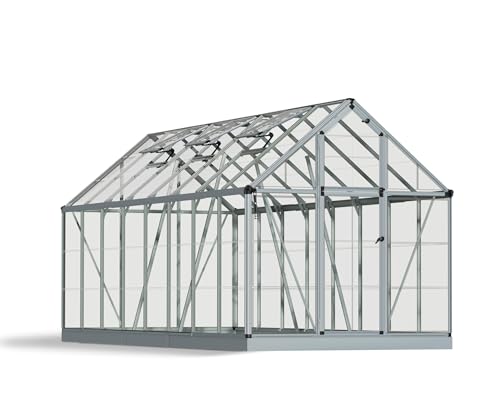
The Snap & Grow trades width for length. Palram gives 12 ft 3 in by 6 ft 2 in, which suits long benches or several rows of vegetables. Clear polycarbonate panels pass over 90% of light, according to Palram, and they snap into an aluminum frame whose SmartLock connection system locks together without screws. The extra-tall Dutch door has a low threshold, though the opening is just 1 ft 10 in wide.
Clear panels are a strength in cloudy or northern regions and a risk in strong sun. In Arizona, Texas or Florida, plan on shade cloth, open vents and a fan. Palram’s page gives no wind or snow figures, and a 12 ft run has more roof to carry snow than a 6x8, so we would not choose it for heavy-snow sites without clearing the roof often. Details are in the Snap & Grow profile.
5. VEVOR 8x10 Polycarbonate Greenhouse — Big, Vented and Light on Documentation
A roomy, well-ventilated option for mild-winter regions and three-season growing, but a poor match for snow country unless you reinforce it and clear the roof constantly.
What we like
Large 8 x 10 ft footprint for the mid-range category
Five adjustable ventilation windows
Slide-in panels, about 2.5 hours of assembly with two people according to VEVOR
Rain gutters and a push-pull lockable door
Drawbacks
VEVOR rates the roof for only 5.12 lb per sq ft, far below typical snow loads
Wind resistance depends on reinforcing and anchoring it yourself
Specs rest on VEVOR's own listing; we could not open a maker page
The VEVOR is the largest rigid freestanding kit here by footprint, at about 8 by 10 ft. According to VEVOR’s listing, it has 4 mm polycarbonate panels with a UV-resistant coating, a corrosion-resistant aluminum frame, five adjustable ventilation windows, rain gutters, a push-pull lockable door and slide-in panels that take about 2.5 hours with two people. Six corner posts are provided for anchoring.
Ventilation is the highlight, and it matters in summer. The weakness is the weather rating. VEVOR rates the roof for only 5.12 lb per sq ft, which is well below the 15 lb per sq ft Palram quotes for the Hybrid, and it says the structure withstands Beaufort 6-7 winds only when properly installed and reinforced. We could not open a maker page, so these specs come from the VEVOR listing. That is why it sits behind the better-documented Palram models. It is a good match for mild-winter regions and three-season growing. See the VEVOR profile.
6. Outsunny 6x8 Walk-In Polycarbonate Greenhouse — The Sheltered-Yard Starter
A mid-range, backyard-sized greenhouse that makes sense for a first polycarbonate structure on a sheltered, level spot. Plan the anchoring and the airflow before you plan the plants.
What we like
Walk-in 6x8 footprint with a hinged roof vent, rain gutters and a sliding door
Powder-coated aluminum frame on a galvanized steel base, according to Outsunny
Light enough at about 76 lb for two people to move into place
Drawbacks
Light weight means anchoring is not optional in windy yards
Standard-height sliding door and low eaves limit tall plants and tall gardeners
The Outsunny 6x8 has a walk-in footprint of about 99 by 75 inches, a hinged roof vent, rain gutters and a sliding door. According to Outsunny, the polycarbonate panels are about 4 mm thick and sit in a powder-coated aluminum frame on a galvanized steel base, with ground bolts and diagonal braces included. At about 76 lb it is light enough for two people to move into place.
Light weight cuts both ways. It is easy to handle, but anchoring is not optional, and Outsunny recommends placing it against an out-of-wind wall and securing it with the ground bolts. With one roof vent, a standard-height sliding door and low eaves, it suits shorter plants and gardeners on a sheltered, level spot. We rank it below the Palram models because they publish more about frame, glazing and dimensions. Read the Outsunny 6x8 profile.
7. Palram Canopia Sun Room 8x10 — The Lean-To That Doubles as a Room
A solid pick if you want a sunroom-style lean-to against the house and have the wall, the permission and the patience to anchor it properly. Not a casual patio add-on.
What we like
Lean-to design that uses a house wall for support and shelter
Twin-wall polycarbonate roof and clear acrylic walls, according to Palram
Tall 8 ft 9 in peak and a 2 ft 8 in wide hinged door
Drawbacks
Premium-range and designed to be anchored, not left freestanding
Attaching to a wall raises permit, siding and lease questions
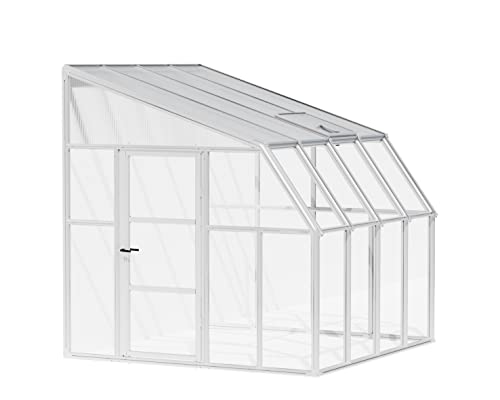
The Sun Room is a different animal. It is a lean-to solarium that uses a house wall as its fourth side. According to Palram, the roof is twin-wall polycarbonate and the walls are clear acrylic with 90% light transmission, on a thick resin frame with aluminum profiles and galvanized steel rods in the central profiles. The footprint is about 10 ft 7 in by 8 ft 5 in, the peak is 8 ft 9 in, and the hinged side door is a roomy 2 ft 8 in wide by 6 ft high.
It ranks seventh not because it is poor but because it suits fewer buyers. Palram says it must be anchored, and attaching it to a wall brings flashing, siding, permit and lease questions that a freestanding kit avoids. It is also not an insulated or heated room. If you have the wall, the permission and a taste for a sunroom-style space for plants and a potting bench, it is a strong pick. The Sun Room profile explains the details.
8. Outsunny 6x4 Lean-To Greenhouse — A Wall Shelter for the Patio
At about 75.6 inches wide, 50 inches deep and 84.3 inches at the peak, this is a small lean-to that leans on a wall. It weighs only about 38 lb. According to Outsunny, it has 4 mm snap-in polycarbonate panels, an aluminum alloy frame, a galvanized steel base, an adjustable roof vent, rain gutters and a sliding door that is about 24.4 by 62.2 inches.
Think of it as a plant shelter with a door. There is room for a narrow bench or a few shelves, not a potting room. Outsunny says to place it against an out-of-wind wall and secure it with the included ground bolts, and the lean-to shape depends on that wall for stability. It protects from mild wind and rain, not from severe weather. For a patio, a side yard or the end of a deck, it is a reasonable low-cost option; check the deck’s load capacity first. See the Outsunny 6x4 profile.
9. Quictent 20x10x7 Walk-In Tunnel Greenhouse — The Most Space, for a Season
The biggest growing area of any budget-range option, as long as you treat it as a seasonal tunnel and anchor it well. It is not a year-round, four-season greenhouse.
What we like
About 200 sq ft of growing space, far more than any rigid kit here
Two zippered doors and eight mesh windows for cross-ventilation, according to Quictent
Quictent promises lifetime replacement of accessories such as connectors, stakes and ropes
Drawbacks
PE film cover is seasonal and will eventually need replacing
Soft-sided tunnel offers limited insulation and wind and snow tolerance compared with rigid panels
The Quictent is a soft-sided tunnel and a very different product from the polycarbonate kits. Quictent’s own specification table gives 19.7 by 9.8 by 6.6 feet, about 200 sq ft, though the product is sold as 20x10x7. The cover is two-layer PE with reinforcement mesh and about 85% light transmission, according to Quictent, over a heavy-duty steel frame with three rows of top crossbars. It has two zippered doors, one mesh and one PE, and eight windows with mesh.
For the space, nothing else here comes close. The compromise is durability. Quictent gives one year on poles and covers and promises lifetime replacement of accessories such as connectors, stakes and ropes. The cover will eventually need replacing, a tunnel catches wind badly, and the U-type stakes hold less than a fixed base. We do not quote a wind or snow rating, because none is given. Treat it as a seasonal, three-season structure. The Quictent profile covers it in full.
A budget-range plant cabinet for seedlings, herbs and small pots on a patio or balcony. Choose it for convenience, not for big plants or harsh weather.
What we like
Small 51.5 x 22.75 in footprint fits a balcony, patio or wall
Three drained shelves and a lift-up top for ventilation, according to Outsunny
About 39.6 lb and easy to move
Drawbacks
Not walk-in, and shelves are shallow and rated for 66 lb maximum per the listing
Light structure suited only to light wind and rain
The cabinet is the odd one out, and that is why it ranks last in a list of walk-in kits. It measures 51.5 by 22.75 by 55 inches and weighs about 39.6 lb, with three drained shelves, a lift-up top and double doors, according to Outsunny. The listing gives a 66 lb maximum for the shelves.
You cannot walk inside it. It suits seedlings, herbs, hardening off and small potted plants on a balcony, a patio or against a wall. University extension guidance says a cold frame typically stays about 5 to 10 degrees warmer than outside, so it extends the season for hardy greens rather than protecting tender plants. For tomatoes, citrus or anything tall, step up to a walk-in model. The cold frame cabinet profile has the details.
Best by Use and Budget
The list below follows the ranking order above, so you can match it to the sections.
Best all-round pick with published ratings: the Palram Canopia Hybrid 6x8, because Palram publishes both wind and snow figures.
Best for hot, sunny regions: the Palram Canopia Mythos 6x8, with all-round diffused panels, two roof vents and a base.
If you want to keep the outlay low, the three budget-range models are the Outsunny 6x4 lean-to, the Quictent tunnel and the cold frame cabinet. Each trades durability or size for a lower cost, so match the one you pick to your plants. Rigid polycarbonate kits in the mid-range and premium tiers cost more up front and need a proper base, and in return they last longer and shelter plants better.
Our Conclusion
For most American backyards, we would start with the Palram Canopia Hybrid 6x8. It is the only kit here with published wind and snow figures, it is easy to understand, and it leaves you free to choose your own base and add ventilation. If you run hot, the Mythos is the natural alternative. If you need room to work, step up to the Balance 8x8. For long rows in a cloudy climate, the Snap & Grow is the one to consider.
The VEVOR and the Outsunny 6x8 are reasonable mid-range choices for mild winters and sheltered yards, as long as you anchor them and keep realistic expectations about snow. The Sun Room and the Outsunny 6x4 suit buyers who want to build against a wall. The Quictent is the answer when floor area matters more than longevity, and the cold frame cabinet is the answer when you have a balcony and a few seedlings.
Whatever you choose, do three things first. Check your permit and HOA rules, prepare a level base, and plan how you will anchor the structure and clear snow. Those steps matter more than any feature on a spec sheet. Use the “See price on Amazon” button on each product card to see the current price before you buy.
Do I need a permit or HOA approval to put up a backyard greenhouse?
Often, you at least need to check. University extension guidance notes that a building permit is usually required for a greenhouse, and many towns exempt small accessory structures below a size threshold that varies by city. Setbacks from fences and property lines apply in many places, and an HOA or a lease can add its own rules. Ask in writing before you order, especially for the larger kits and for the lean-to models that attach to a house wall.
Is twin-wall or single-wall polycarbonate better for a greenhouse?
It depends on your climate and your plants. Twin-wall panels have an air pocket that slows heat loss and they diffuse light, which helps in hot, sunny regions. Single-wall clear panels pass more light and give a clearer view, which suits cloudy northern sites, but they hold less heat and can overheat in strong sun without shade cloth and ventilation.
Which greenhouse here has published wind and snow ratings?
Of the ten, only the Palram Canopia Hybrid 6x8 has a maker-published wind speed and snow load that we found: Palram says it withstands winds up to 56 mph and snow loads of 15 lb per sq ft. VEVOR's listing says its 8x10 roof is rated for up to 5.12 lb per sq ft and Beaufort 6-7 winds when properly installed and reinforced. For the others we found no published rating, so treat wind and snow tolerance as limited and anchor them well.
How do I anchor a greenhouse kit?
Follow the maker's instructions first. Most kits have no floor, so you build a level base such as a pressure-treated lumber frame, pavers, a gravel pad or a concrete slab, then fasten the frame to it. Outsunny says to use the included ground bolts and to place its models against an out-of-wind wall. Soft-sided tunnels such as the Quictent rely on U-type stakes, which hold less than a fixed base.
Which kit suits a balcony, patio or small deck?
The Outsunny cold frame cabinet is the smallest option, at 51.5 by 22.75 inches, and the Outsunny 6x4 lean-to sits against a wall in about 50 inches of depth. Check your deck's load capacity, because wet pots and soil are heavy, and ask your landlord or HOA before attaching anything.
Can any of these greenhouses be used through a cold winter?
Rigid polycarbonate kits with twin-wall panels shelter plants better than a plastic tunnel, but none of these is an insulated, heated building. Without a heater they usually add only a few degrees over the outside air, so they extend the season for hardy crops rather than protecting tender ones through a hard freeze. Check your USDA hardiness zone and plan on clearing snow from the roof.