Best Greenhouse for a Deck, Patio or Balcony
Fitting a greenhouse on a deck, apartment patio or balcony: footprint, lean-to placement, deck load, wind, anchoring without drilling, light and lease rules.
At a glance
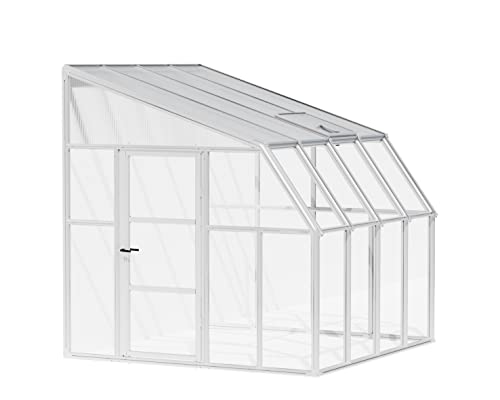
For a balcony or small patio, the Outsunny Cold Frame Greenhouse Cabinet is the portable choice. The Outsunny 6x4 Lean-To Greenhouse fits a patio or deck against a wall, and the Palram Canopia Sun Room 8x10 attaches to a house but needs anchoring and likely a permit. Check deck capacity and lease rules first.


A greenhouse on a deck or patio sounds simple until you start asking questions. How much floor space do you actually have? Can the deck carry wet soil and a whole structure on top of it? Who owns the wall you want to lean against? Will the wind on the sixth floor turn a lightweight kit into a kite? Renters, condo owners and people with small yards all run into the same set of constraints, and they are different from the ones facing a backyard gardener with an open lawn.
This guide goes through those constraints one at a time and then matches three kits from our list to three situations: the balcony, the patio or deck against a wall, and the attached sunroom. We have not assembled or handled any of them. We compared the specs the manufacturers publish and what university extension services say, and we say where a number is missing. For the full ranking, see the best greenhouses of 2026.
Start With the Footprint
Measure the space you can really use, not the space you wish you had. Subtract the door swing, the railing, the walkway you need to get past and the spot where a patio chair already lives. Then compare it with the footprints below, all taken from the makers’ published dimensions:
- Cold frame cabinet: about 51.5 by 22.75 inches and 55 inches tall, according to the Outsunny listing.
- Lean-to: about 75.6 inches wide by 50 inches deep and 84.3 inches at the peak, per Outsunny.
- Sun Room: about 10 ft 7 in by 8 ft 5 in, with a height of 8 ft 9 in, according to Canopia by Palram.
Leave room around the structure, too. You will want to open doors fully, reach the vent and get a broom around the sides. If you cannot reach the back of the shelves, plants at the back will be neglected.
Deck Load: The Question Most People Skip
A deck is built for people and furniture, not for a heavy structure with wet pots. Decks.com, published by Trex, says residential decks must be designed for a minimum live load of 40 psf, and it notes that decks in heavy-snow regions may face more than that and that snow sliding off a roof above acts on a deck differently from a live load. That 40 psf figure is a spread-out load. A greenhouse concentrates weight in a few points: the base, the legs, the shelves, the water and the soil.
Soil is the surprise. A few big pots of wet soil, a bag of potting mix and a full watering can weigh far more than they look. A practical approach:
- Keep the heaviest items near the posts or the edge of the deck where the joists are supported, not in the middle of an unsupported span.
- Use lighter potting mixes and plastic or fabric pots instead of ceramic and stone.
- Spread the weight over several points. Boards under feet help.
- If the deck is old, soft, wobbly at the railing or visibly rotted, do not add weight until someone qualified has looked at it.
- For a walk-in kit, ask a builder or building inspector about load and attachment before you buy. We would not put an 8x10 on a deck without that conversation.
The manufacturers do not publish a deck rating for any of these kits. Outsunny’s cabinet listing gives a shelf capacity of 66 lb maximum, which tells you about the shelves, not about your deck.
Wind on Balconies and Rooftops
Wind speeds up around buildings and on upper floors. A small, light structure is exactly what catches it. Outsunny’s lean-to weighs about 38 lb and the cabinet about 39.6 lb, according to the listings. Plan on tying a cabinet to a railing or wall, if your lease allows, and treat a balcony as a fair-weather location. Bring in fragile plants and close the lid before storms. We would also avoid balcony placements above a street, where a falling cabinet is a safety problem for people below.
Anchoring Without Drilling
Most kits assume you can drive a bolt into soil or a slab. On a deck or balcony you may not be able to. The options, from most to least secure:
- Strap to the structure. Attach a strap or bracket from the greenhouse to a wall stud or a railing post, if the owner permits. Ask first.
- Weight the base. Use sandbags, pavers or heavy pots on the base shelves. This is a partial fix against gusts, not a guarantee.
- Tuck it into a corner. An inside corner of two walls reduces wind exposure.
- Do not rely on weight alone. Palram says the Sun Room must be anchored and notes in its FAQ a weight of about 400 lb, which is not enough to resist wind on its own.
Light and Orientation
A balcony or patio is often shaded by the building that holds it. University of Georgia Extension says the south or southeast side of a house is the best location because it gets the most sunlight from November to February, with east second best, then southwest and west, and north the least desirable. University of Alaska Fairbanks Extension recommends at least 8 hours of direct sun per day, ideally 12 or more. Before you buy anything, watch the space on a clear day and note how many hours of direct sun it gets.
A lean-to against a south-facing wall catches sun and the wall’s stored warmth. The trade-off, noted by the University of Georgia bulletin, is that lean-tos have limited light and ventilation control, and space for only one or two rows of benches. In summer, open the vent and the door and consider shade cloth.
Rules: Landlords, HOAs and Permits
Rules can decide this for you. University of Georgia Extension says building permits are usually required for greenhouses, and thresholds for small structures vary by town. A portable cabinet is a very different thing from an attached kit. Whatever you choose:
- Renters: ask your landlord in writing, and ask about drilling, straps and balcony weight.
- Condo owners and HOA members: ask about color, visibility from the street and railings.
- Anyone attaching to the house: ask the building department, and check whether the attachment affects siding or flashing.
Which Kits Fit
The Balcony: Outsunny Cold Frame Greenhouse Cabinet
A small polycarbonate cabinet with shelves, two front doors and a lift-up top. A fit for a balcony or small patio where a walk-in will not go.
According to Outsunny, the cabinet has polycarbonate walls that let about 90% of light through while blocking UV, an aluminum frame on a steel base, a lift-up top cover for ventilation, two front doors and three shelves with drainage. Outsunny pitches it for patios, indoors as a terrarium or as a mini lean-to against a wall. It is small and portable, which makes it the easiest to fit on a balcony and the easiest to move if the landlord objects.
It is not a place to stand, and it will not protect plants through a hard freeze. Think seedlings, herbs and a few pots. Mind the drainage, since water from the shelves has to go somewhere that your downstairs neighbor will not mind. Our cold frame cabinet profile goes into the details.
The Patio or Deck Against a Wall: Outsunny 6x4 Lean-To
A compact lean-to with polycarbonate panels, a roof vent and a sliding door. A fit for a patio or deck wall where you want a little walk-up growing space.
The lean-to is built to sit against a wall. Outsunny describes 4 mm polycarbonate panels with a snap-in connection, an aluminum alloy frame on a galvanized steel base, a roof vent, rain gutters and a sliding door, and it says to place it against an out-of-wind wall and secure it with the included ground bolts. That last point is the catch for decks: the ground bolts are meant for soil. On a deck you will need to find another way to secure it, such as brackets to the wall, and you must check the owner’s rules and the deck’s capacity. Outsunny says it protects from mild wind and rain, so it is a fair-weather structure and we do not quote any wind or snow rating.
It makes sense for a patio with a solid wall behind it and for someone who wants shelves of seedlings and a place to put pots. See the Outsunny 6x4 lean-to profile for more.
The House-Attached Sunroom: Palram Canopia Sun Room 8x10
A larger lean-to with a twin-wall roof and a door, designed to attach to the house. A fit for a patio or yard wall where you have room, permission and a solid base.
According to Canopia by Palram, the Sun Room has a twin-wall polycarbonate roof, clear acrylic walls with 90% light transmission and a hinged side door about 2 ft 8 in wide, plus a roof vent. It must be anchored, and the FAQ notes a weight of about 400 lb. This is a bigger commitment than the other two. It will likely trigger a permit conversation, since attached structures are treated differently from sheds in many towns, and it needs a solid foundation.
A kit this size belongs on a patio slab or on the ground, not on a typical wooden deck, unless a builder has confirmed the framing. If you have a sunny house wall, a concrete patio and the right to build, it is the most capable option here. Our Sun Room profile covers the permit and anchoring questions.
Quick Decision Guide
- Balcony, no drilling, small space: the cabinet.
- Patio or deck with a solid wall and room for a small lean-to: the 6x4 lean-to, with a plan for anchoring.
- House wall, permission, concrete patio: the Sun Room.
- Open lawn: you are not limited to these. See our guide for beginners.
Sources
Frequently asked questions
Can I put a greenhouse on a wood deck?
Sometimes, but check the deck first. Residential decks are designed for a minimum live load of 40 psf, according to Decks.com, and soil, wet pots and water add up quickly. A small cabinet is easy to carry. A walk-in kit anchored through the deck surface deserves an inspector's or builder's opinion on load and attachment.
Can I have a greenhouse on an apartment balcony?
A small cabinet or cold frame is the realistic option. Balconies have limited floor area, strong wind and often lease or HOA rules about what can sit on them. Ask your landlord or HOA in writing before you buy, and keep the load light and secured.
How do I anchor a greenhouse without drilling into my deck or patio?
For a small cabinet, weigh the base down and tie it to a railing or wall with straps where rules allow. For lean-to kits, the maker's anchoring hardware is designed for the ground, and Outsunny says to secure its lean-to with the included ground bolts. Without drilling, treat the greenhouse as a fair-weather structure and take plants inside before storms.
Which direction should a patio greenhouse face?
University of Georgia Extension says the south or southeast side of a house is the best location because it gets the most sunlight from November to February. University of Alaska Fairbanks Extension recommends at least 8 hours of direct sun a day, ideally 12 or more. A wall that faces north is the least desirable.
Do I need a permit for a patio greenhouse?
It depends on the size, whether it attaches to the house and your town. University of Georgia Extension notes that building permits are usually required for a greenhouse. A portable cabinet is a different matter from an attached 8x10 kit, so call your building department and, if you rent or have an HOA, ask them too.
Will a lean-to greenhouse overheat against a wall?
It can. A lean-to against a sunny wall holds heat, and University of Georgia Extension lists limited light and ventilation control as lean-to drawbacks. Use the roof vent, open the door on warm days and consider shade cloth in summer.